
Casino Bus Revenue Program: Turning a Non-Performing Expense into Profit
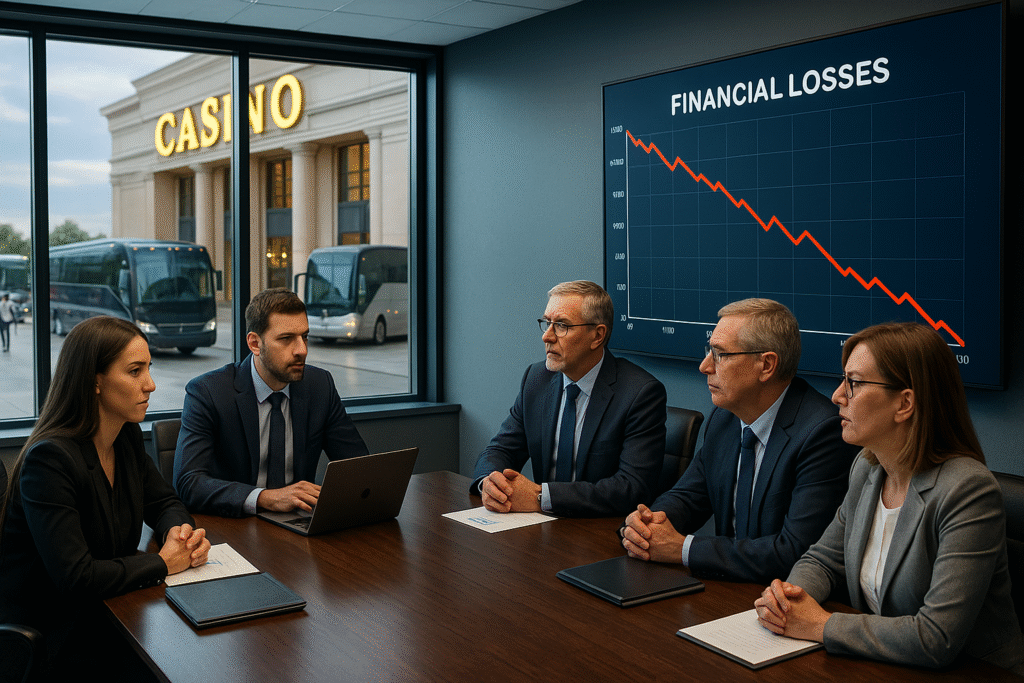
For most CFOs, the transportation line item in a casino’s budget has always looked the same: a recurring expense that never produces measurable return. Vendors get paid a fixed fee. Players ride the bus, spend a few hours on the property, and go home. The cost sits on the books as a non-productive expense — tolerated, but never optimized.
But what if transportation could become one of your highest-performing revenue streams?
The Financial Problem with Traditional Bus Programs
Casinos typically run buses the same way they have for decades:
Pay operators a flat daily rate, whether seats are full or empty.
Require riders to commit to rigid schedules and 4–5 hour stays.
Add promotional incentives like free play or food vouchers just to fill buses — an additional drain on margins.
Hope that player spend offsets the cost.
From a CFO’s perspective, this is a fragile equation. If riders win, the property loses at the tables and still pays the bus bill. Layer in the promotional expense, and you have what amounts to a triple hit against profitability.
But the costs don’t stop there. Once some players lose their bankroll, they often linger on the property, sometimes for two or three hours until the return bus arrives. While they wait, they:
Occupy slot machine seats that other paying customers could have used.
Take up space in dining halls, cafeterias, and lounges without adding incremental spend.
Consume resources like complimentary drinks, bottles of water, and restroom facilities.
Create additional labor costs in cleanup and service for hours without contributing revenue.
Multiply this behavior across hundreds of riders, every day, and the “waiting game” becomes an invisible drain on margins — thousands of bottles of water, thousands of restroom flushes, lost gaming revenue from occupied seats, and wasted staff hours that never show up in the direct bus P&L but absolutely hit the bottom line.
A New Model: Transportation as a Revenue-Generating Asset
The Casino Bus Revenue Program reframes transportation as a self-funded player acquisition system. Instead of sitting as an expense line, it becomes a profit center:
Direct transportation margin. The bus program pays the casino instead of draining cash.
Incremental gaming revenue. Buses deliver convenience-driven, qualified players from a much larger catchment area — not just riders chasing free play
Scalable performance. Multiple routes compound daily volume into predictable, trackable revenue.
Operational simplicity. The bus company handles logistics; player card-based tracking automates reporting and reconciliation.
For CFOs, this means moving transportation off the “cost of doing business” ledger and onto the “recurring revenue” side of the P&L.
Before and After: The Economic Shift
Traditional Program
Casino pays vendor → players maybe spend → casino loses if riders win.
Our Program
Bus pays casino → players spend in the casino → casino wins twice (transportation + gaming) — and avoids the financial drag of non-productive hours once play is finished.
It’s not just an operational improvement. It’s a complete financial transformation.
Risk Alignment: Why This Model Works for Finance
Most marketing or player development programs require upfront outlays with uncertain returns. Our bus revenue model is different:
Aligned incentives. We only earn when you earn — our share ties directly to net profit, not inflated metrics.
Predictable demand. Daily ridership creates a recurring, annuity-like stream of players.
No headcount bloat. Your finance team doesn’t need to account for new staff. Operations stay lean.
Decade of proof. The model has already run for over ten years in one of the largest U.S. casinos, quietly generating millions.
Partnership Options for CFOs
Every property has different balance sheet realities. That’s why we offer two clean ways to engage — designed for finance clarity without the fine print.
1) Licensed Blueprint
Own the system, build and operate it in-house.
One-time license to the playbook and measurement stack
Your team runs it; you keep the upside
Finance-friendly treatment (CapEx/amortizable)
2) Partnership with Backstop
Co-deploy with us for speed, guardrails, and shared success.
Time-limited ramp stipend for management & analytics (sunsets after ramp)
A standby coverage budget sits in your account on standby to protect routes during ramp/market shocks (budgeted, not spent unless drawn)
Profit share only on positive net, with transparent reporting
Governance & transparency
Clear KPIs and monthly reviews
Right-sized scaling based on performance signals
Full visibility into route economics
Let’s align on targets and choose the structure that best fits your balance sheet.
Final Word for CFOs
In finance, the goal is simple: minimize unproductive outflows, maximize recurring revenue. Traditional bus programs fail on both counts. A re-engineered system succeeds on both.
Our Casino Bus Program turns what used to be a static expense into a dynamic, scalable source of cash flow. For CFOs, that means a cleaner P&L, a stronger margin, and one more lever of growth that doesn’t depend on guesswork or promotions.
Call to Action
Let’s build some true house advantage into your balance sheet. 👉 Request a Decision Brief or connect with our Senior Partner and Managing Director on LinkedIn.